
BPC-157 vs. Sermorelin: Understanding the Research Differences
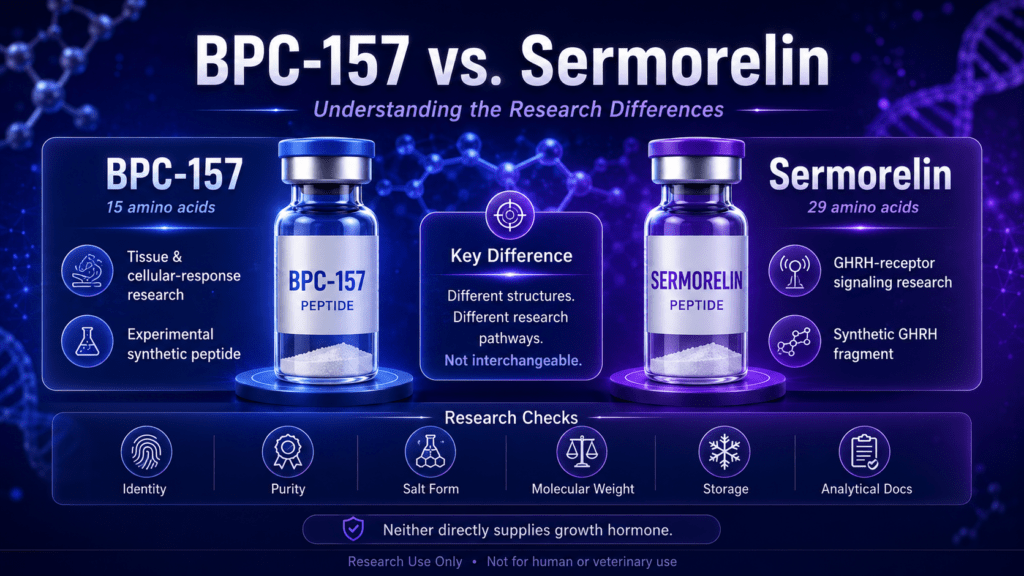
BPC-157 and Sermorelin are synthetic peptides investigated for very different purposes. Although both are frequently discussed in peptide research, they differ considerably in structure, biological pathway, and experimental focus. They are not interchangeable compounds.
What Is BPC-157?
BPC-157 is a synthetic peptide consisting of 15 amino acids. Most published research has involved laboratory or animal models examining its interactions with cellular signaling, blood-vessel formation, inflammatory processes, and tissue response.
These preclinical findings do not establish safety or effectiveness in humans. The FDA has identified limited human safety information and potential concerns involving immunogenicity, peptide-related impurities, and proper active-ingredient characterization.
What Is Sermorelin?
Sermorelin is a synthetic 29-amino-acid fragment corresponding to the biologically active portion of growth hormone-releasing hormone, commonly abbreviated as GHRH.
In experimental systems, Sermorelin is studied primarily for its interaction with GHRH receptors in the pituitary and its ability to stimulate signaling associated with endogenous growth-hormone release. This makes its laboratory focus fundamentally different from that of BPC-157.
Sermorelin acetate was previously marketed in the United States under the name Geref for specific diagnostic and pediatric indications. Those products were later discontinued and are no longer commercially marketed—not because of an FDA safety determination, but following the manufacturer’s business decision. (FDA medical review)
Key Research Differences
Characteristic | BPC-157 | Sermorelin |
|---|---|---|
Peptide length | 15 amino acids | 29 amino acids |
Primary research focus | Cellular and tissue-response pathways | GHRH-receptor and growth-hormone signaling |
General classification | Experimental synthetic peptide | Synthetic GHRH fragment |
Directly supplies growth hormone | No | No |
Interchangeable compounds | No | No |
Because the peptides act through different experimental pathways, combining them should not be assumed to produce complementary, synergistic, or beneficial effects. Any study involving both compounds requires an appropriately controlled protocol, independent characterization of each material, and careful interpretation of results.
Researchers should verify peptide identity, purity, salt form, molecular weight, storage requirements, and analytical documentation before beginning an experiment.
Research Use Only Disclaimer: BPC-157 and research-grade Sermorelin are intended strictly for laboratory research and analytical testing. They are not intended for human or veterinary use, consumption, self-administration, diagnosis, treatment, or prevention of any disease. Nothing in this article constitutes medical advice or establishes the safety or effectiveness of either compound.
Great post!